Cultural and Creative Products
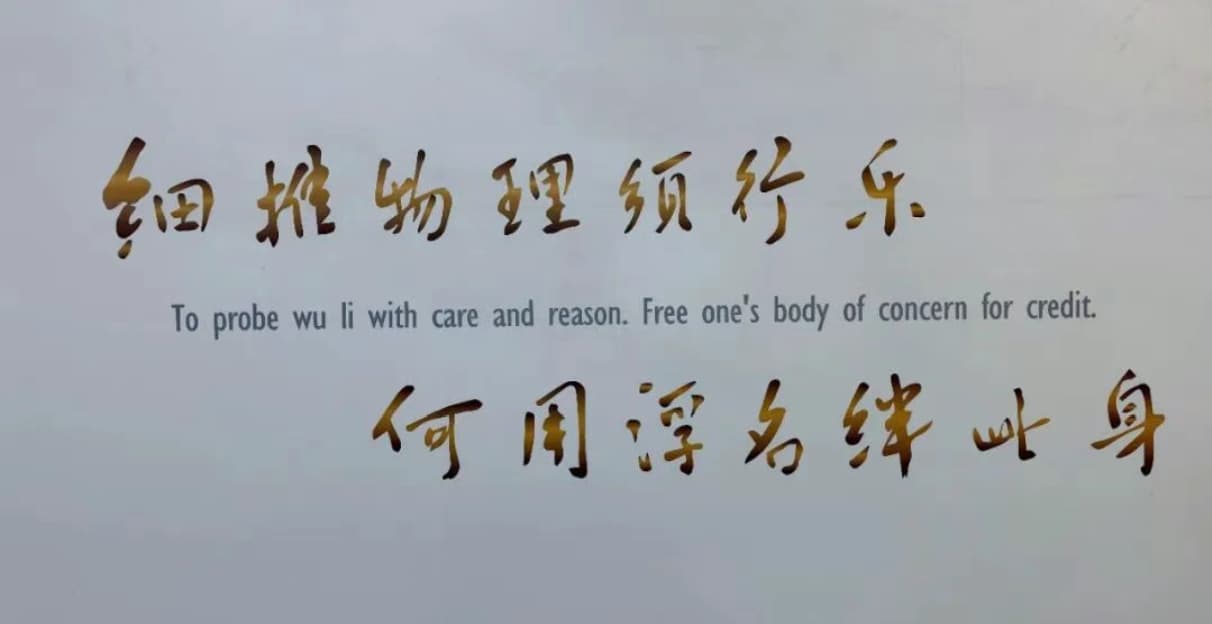
"Diligently study the laws of nature for pleasure": The Story of Professor T.D. Lee's Nobel Prize Manuscript Tie
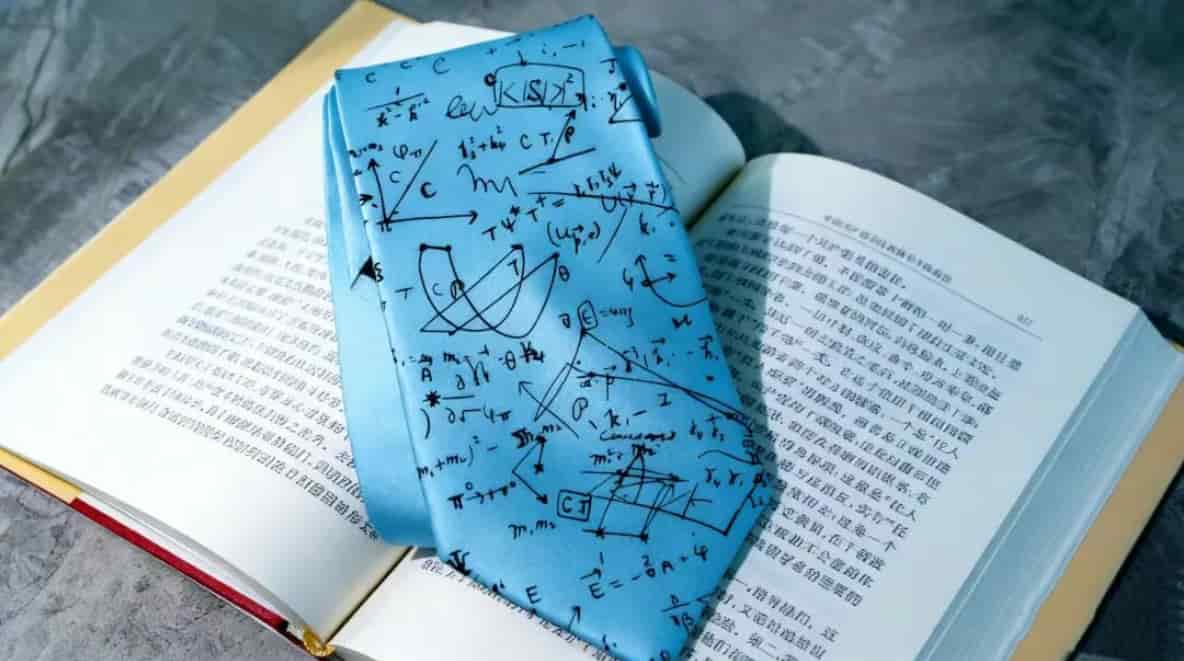 This story started in April 1956,when Professors Tsung-Dao Lee and Chen-Ning Yang first conceived the groundbreaking idea of parity violation and launched their close collaboration on this problem. Professor Lee was at Columbia University, while Professor Yang was then at Princeton University in New Jersey, not far from New York City. They met frequently for in-depth discussions on the "θ–τ puzzle", a joint effort that would eventually lead to their Nobel Prize-winning paper.
PART 1
The "Scientific Legacy" in the Wastebasket
In June 1956, Professor Lee accepted an invitation to serve as a visiting professor at Brookhaven National Laboratory (BNL) for the summer. BNL provided large scratch pads for each office, and fortunately, Professor Lee used these pads rather than blackboards to jot down formulas and ideas in his daily work, tearing off the pages and discarding them into the wastebasket once finished. Thanks to Professor Eugene Church, a nuclear physicist in the adjacent office, who could not bear to see these potentially invaluable notes thrown away, he quietly saved the draft papers each evening.
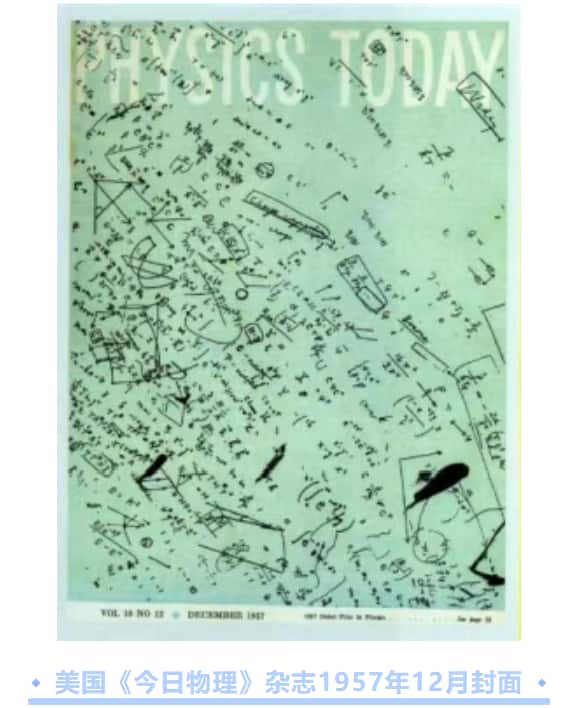
In October 1957, Nobel committee announced that The 1957 Nobel Prize in Physics would be awarded to Chen Ning Yang and Tsung-Dao Lee “for their penetrating investigation of the so-called parity laws which has led to important discoveries regarding the elementary particles”. Professor Church immediately donated the manuscripts he had rescued from the wastebasket to the American Physical Society (APS). One page was chosen as the cover of the December 1957 issue of Physics Today. Its intertwined formulas, sketches, and occasional ink smudges vividly captured the journey from confusion to clarity in theoretical physics, serving as direct testimony to the birth of the theory of parity violation. This precious archive has since become the most celebrated story of a "scientific legacy rescued from a wastebasket" in Nobel Prize history.
PART 2
From Academic Cover to National Gift
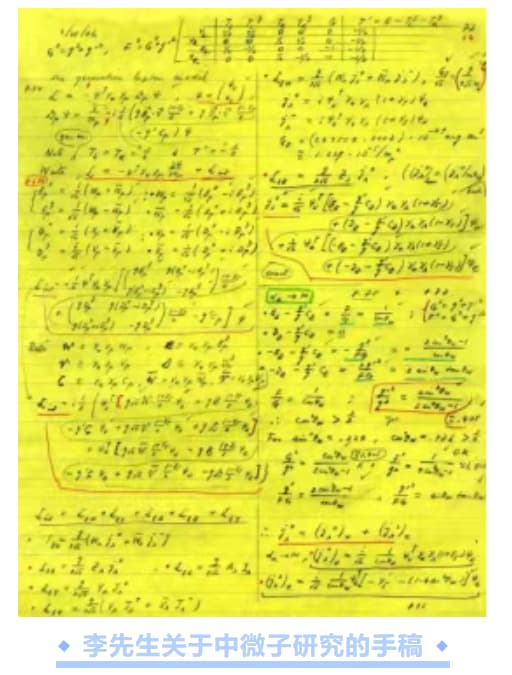
Half a century later, in 2006, a grand symposium was held in Beijing, to celebrate Professor Lee’s 80th birthday and honor his six decades of dedication to physics. During the preparations for the event, Professor Lee presented two framed manuscript copies to then Premier Wen Jiabao: one was the cover of the December 1957 Physics Today, and the other was a manuscript on neutrino research written by Professor Lee on March 25, 2006. Today, these framed manuscript replicas, the complete set of original Nobel Prize manuscripts, and Professor Lee’s Nobel medal are all preserved at the Tsung-Dao Lee Library at Shanghai Jiao Tong University.
Looking back at the timeline, Lee and Yang started their collaboration in April of 1956. On October 1, 1956, their paper "Question of Parity Conservation in Weak Interactions" was formally published in Physical Review, a leading physics journal. Professor Chien-Shiung Wu announced the experimental confirmation of parity violation in January 1957, with the results formally published in February. On January 29, 1957 — just two days before the Nobel Prize nomination deadline — Professor John Simpson of the University of Chicago nominated this theoretical breakthrough. After a swift review by the Nobel Committee, the prize was announced on October 31, 1957, merely one year after the paper’s publication. This set one of the fastest "from paper to prize" records in Nobel Prize history , highlighting the profound significance and far-reaching impact of the discovery.
PART 3
70th Anniversary: Letting Science be "Tied" to the Heart
The year 2026 marks the 70th anniversary of the publication of Lee and Yang’s theory of parity violation. To celebrate this milestone, the Tsung-Dao Lee Institute of Shanghai Jiao Tong University, and the Tsung-Dao Lee Center for Sciences and Arts have jointly launched two commemorative neckties featuring the iconic cover page of the December 1957 Physics Today. These designs pay tribute to the great discovery that reshaped the landscape of modern particle physics, and honor Professor Tsung-Dao Lee’s spirit of open inquiry and dedication to physics, a poem by Du Fu written more than a millennium ago: "To probe wuli with care and reason. Free one’s body of concern for credit".
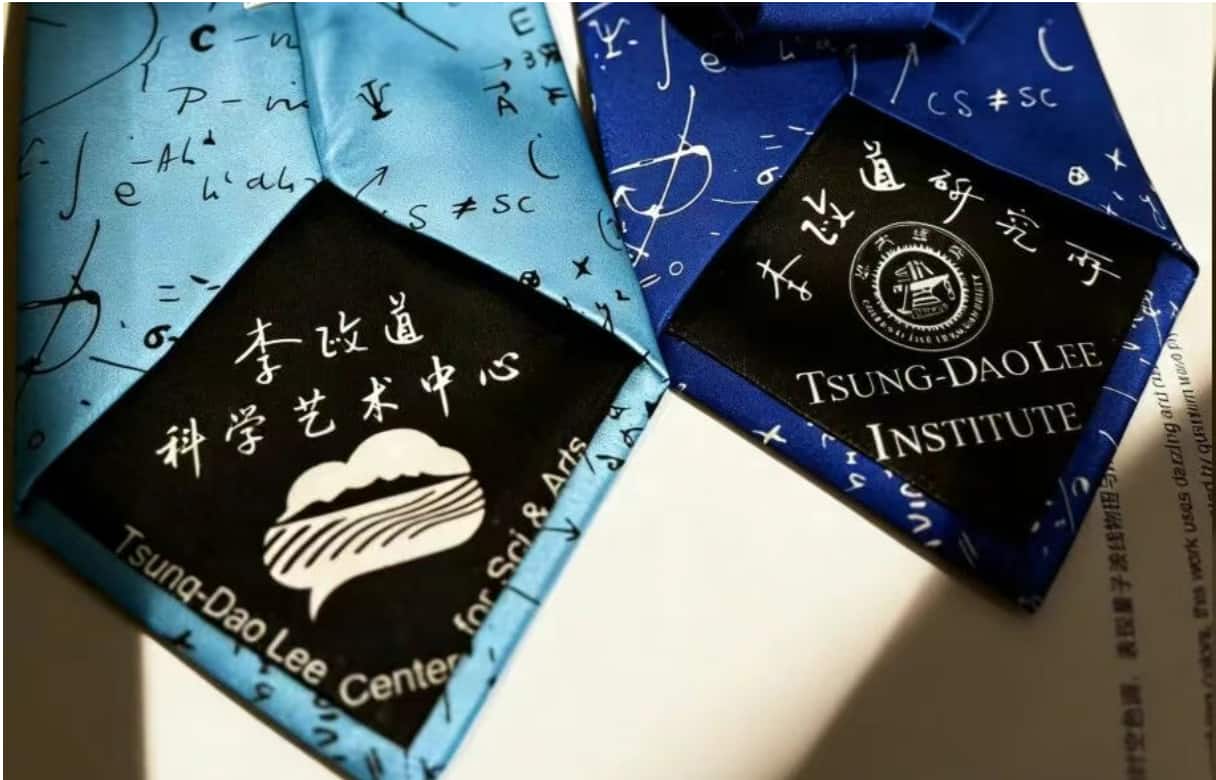
From the drafts in the office wastebasket in 1956, to the journal cover that swept the physics world in 1957, and now to the cultural and creative tie worn on the chest, this manuscript has spanned 70 years of time and space. It tells us that science is not only rigorous formulas, but also an art of exploration full of warmth and stories.
 - END -